Portland City Council is set to vote Thursday, Nov. 12 on two ordinance packages that would reshape the city's northwest industrial waterfront and its downtown core.
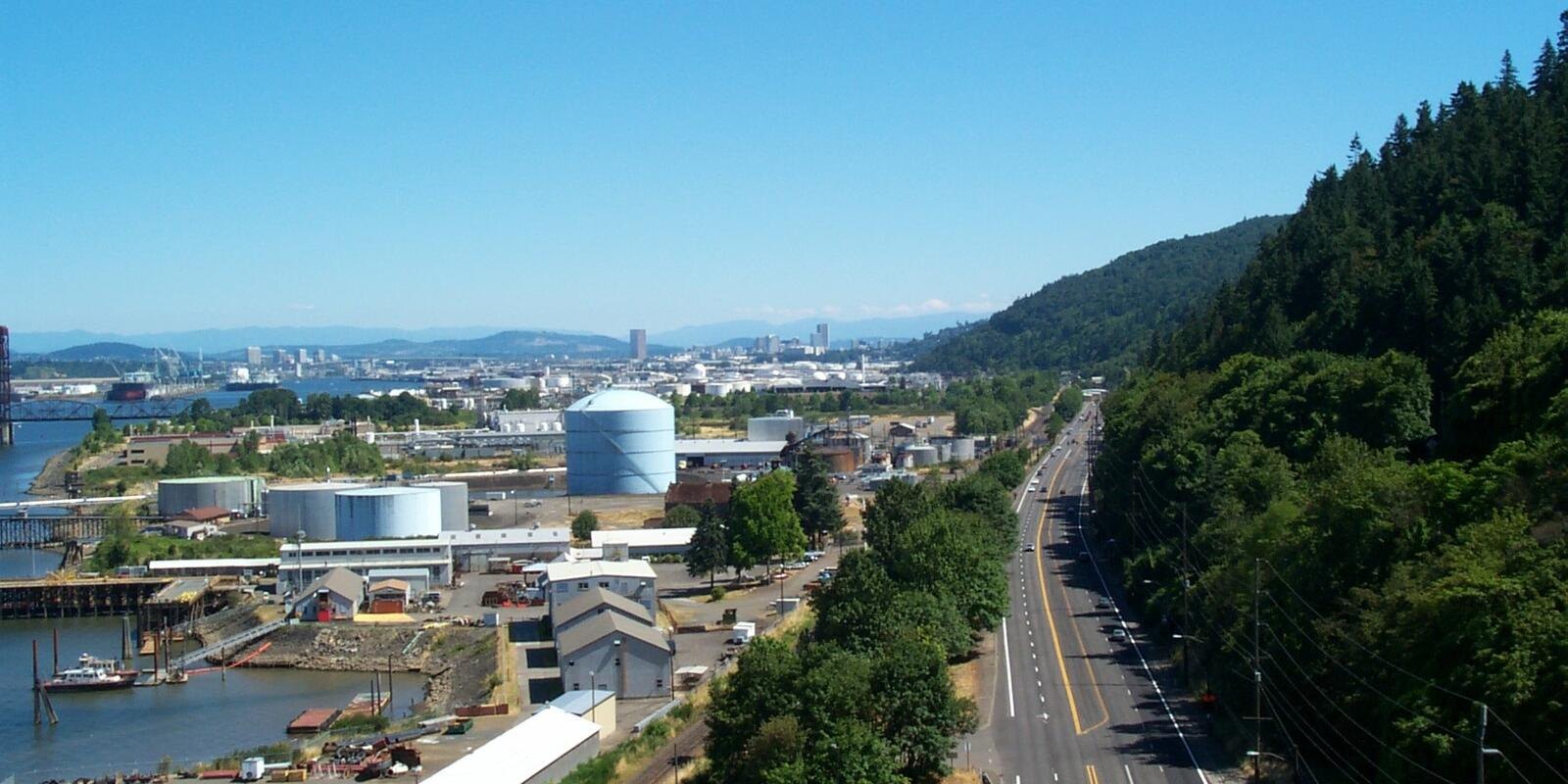
One package targets the Critical Energy Infrastructure (CEI) Hub, a six-mile stretch of industrial land along the Willamette River that stores 90% of Oregon's liquid fuel supply.
The other rewrites Central City zoning rules to encourage housing production and address persistent post-pandemic vacancy.
Both votes are scheduled for 2:15 p.m. at City Hall. Public testimony on both packages is closed.
CEI Hub: cutting fuel storage to reduce earthquake risk
The CEI Hub ordinances would require the hub's 11 bulk fuel terminals to cut their total in-service fuel storage capacity by at least 20% by Dec. 1, 2036, according to the Bureau of Planning and Sustainability's November project update.
A companion ordinance would update the Comprehensive Plan, zoning code and building code to further limit expansion of existing terminals.
The rules stem from studies showing the hub sits on soil with a high risk of liquefaction. A 2012 Oregon Department of Geology and Mineral Industries (DOGAMI) study found that a magnitude 8 or 9 Cascadia Subduction Zone earthquake would hit the area with ground shaking, liquefaction, lateral spreading and landslides.
Most of the hub's storage tanks were built before Oregon adopted seismic design requirements in 1993, according to the CEI Hub ordinance.
The project drew more than 850 written public comments during its discussion draft phase and 63 people testified at a December 2025 Planning Commission hearing.
Community members pushed for a reduction greater than 20%, while the Port of Portland, state agencies and business groups raised concerns about potential impacts on aviation fuel supply and fuel prices.
In response, the ordinances exempt aviation fuel storage tanks from the reduction requirement. Regulated public utilities, including NW Natural, are also exempt. Terminals may transfer capacity between sites through a land use review, and each terminal can expand aviation fuel storage by 5%.
An independent economic analysis by ECOnorthwest found that storage capacity alone is unlikely to determine fuel prices. The firm identified uncertainty in key assumptions but said a potential outcome is that the regulations would not affect fuel prices.
The Bureau of Planning and Sustainability is required to report back to council in 2028, 2031 and 2036 on fuel demand projections and program implementation. The work is funded in part by a Federal Emergency Management Agency (FEMA) hazard mitigation grant.
Central City: zoning changes to fight vacancy
The Central City Code Amendments would update the Central City 2035 Plan to remove barriers to housing and expand business opportunities downtown.
The Central City covers 3% of Portland's land but is planned to absorb about 25% of the city's residential and employment growth through 2045, according to the project's website.
Key changes include increased bonus building heights across the Central City, a new path to unlimited height in certain areas, rezoning some General Industrial land in the Central Eastside to Central Employment, and lifting restrictions on ground-floor residential units. The amendments also expand food cart locations, loosen off-street parking rules and allow new uses in Waterfront Park.
The Planning Commission recommended the package to council in July after declining requests from some Central Eastside property owners for additional industrial-to-employment rezoning. Staff analysis showed more than 15,000 housing units could already be built in the Central Eastside under existing and proposed zoning.
Council approved two amendments on Oct. 29. One made technical fixes to ground-floor residential standards. The other removed a discretionary shadow-review requirement tied to the new unlimited-height option while keeping existing shadow standards under the base-and-bonus system. Council discussed food-cart allowances and industrial-land preservation but approved no additional changes.
If adopted, the Central City amendments would take effect March 1, 2027.
How to watch
The Nov. 12 meeting will be held at City Hall, 1221 SW Fourth Ave., and streamed on the city's YouTube channel. Questions can be directed to [email protected].