District 1 Councilor Candace Avalos is responding to criticism of a proposed ordinance that would establish phased carbon-emissions limits for Portland's largest commercial and multifamily buildings.
In a statement posted Nov. 25, Avalos, chair of the Housing and Permitting Committee, said the Climate and Health Standards (C&HS) ordinance will return to her committee Tuesday, Dec. 1. She acknowledged concerns that the proposal could increase housing costs, discourage investment and force businesses to close, but called those claims "dramatic" given the policy's timeline, which extends to 2050.
What the ordinance would do
The city's Climate and Health Standards proposal would cover commercial buildings and multifamily residential buildings with four or more dwelling units. The proposed carbon-performance standards would apply to covered buildings measuring at least 20,000 square feet.
Those buildings would have to reduce greenhouse gas emissions by 20% every five years beginning in 2030, with the goal of reaching zero emissions by 2050. Regulated affordable housing would be exempt from the requirements.
Buildings account for 42% of Portland's carbon emissions, according to the city's 2023 emissions inventory.
The proposal would also require owners of rental housing with four or more units to disclose energy costs, appliance information and available utility-bill assistance to prospective tenants. The policy page estimates that about 1,200 multifamily buildings would be added to the roughly 1,000 commercial buildings already required to report energy use annually.
The proposed ordinance excludes condominiums and buildings predominantly used for industrial, manufacturing, parking, primary or secondary education, warehouse or worship purposes.
Cost estimates and rent concerns
A January 2025 cost analysis by ECOnorthwest, commissioned by the city's Bureau of Planning and Sustainability, estimated compliance costs of roughly $10,600 per unit for smaller, older multifamily properties and about $5,600 per unit for larger, newer properties. Those figures are modeled estimates based on property characteristics and potential improvements.
The analysis identified about 450 large rental multifamily properties, containing approximately 15,260 units, that would need to reduce emissions to meet the proposed targets. Emissions-reduction measures for those properties could cost about $155 million, the study found.
After accounting for potential federal, state and local funding sources, including the Portland Clean Energy Fund, the analysis estimated the remaining funding gap could fall between $62 million and $85.5 million. Those estimates depend on the availability of the funding sources considered in the study.
On rents, ECOnorthwest concluded that compliance could result in moderate increases of up to $45 per month for most naturally occurring affordable housing units. The analysis also said energy savings from improvements such as heat pumps could offset some of those increases. It did not expect compliance costs to be passed through uniformly to renters.
The proposed ordinance prohibits owners from passing Climate and Health Standards compliance costs and fees directly to residential tenants.
Avalos responds to feedback
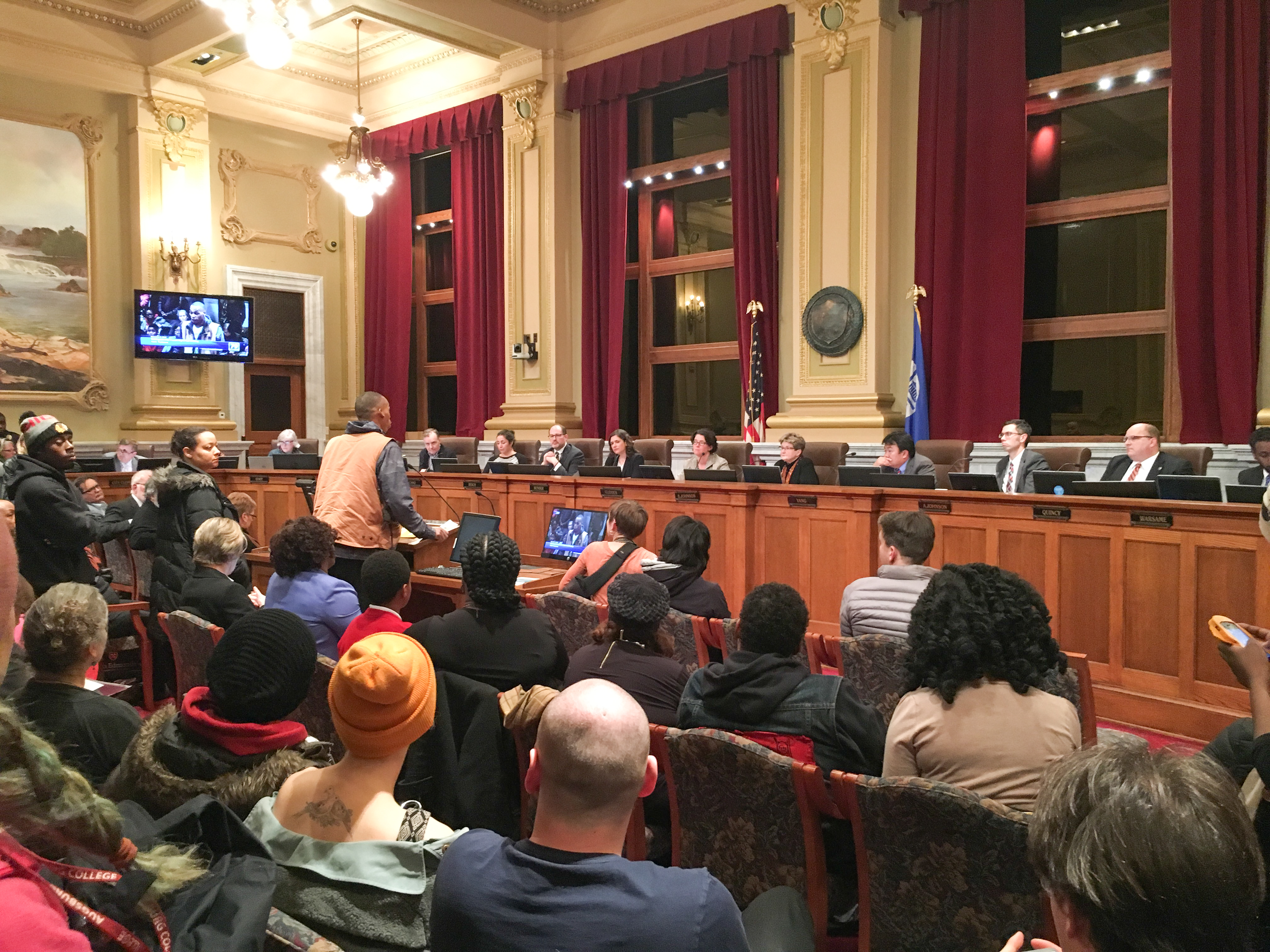
Avalos said her office has been reviewing testimony from an Oct. 20 committee hearing and working with the Bureau of Planning and Sustainability and the City Attorney's Office on potential amendments. She said she invited every council member to submit questions and suggestions.
Issues under review include compliance pathways for hospitals, concerns from owners of naturally occurring affordable housing, questions about shared energy systems and what would happen if electric utilities fail to meet Oregon's clean-energy targets.
Oregon's House Bill 2021, passed in 2021, requires regulated electric utilities, including Portland General Electric and Pacific Power, to reduce greenhouse gas emissions associated with electricity sold to Oregon customers to zero by 2040. The law also establishes interim reduction targets of 80% by 2030 and 90% by 2035.
Avalos said the ordinance includes hardship provisions, extensions and alternate compliance plans for buildings with specialized needs, such as hospitals. She framed the policy as a responsibility of building ownership.
"If your asset is causing harm, you have a responsibility to help address that harm," Avalos wrote.
What's next
The Housing and Permitting Committee is scheduled to take up the ordinance again Tuesday, Dec. 1, at 2 p.m. Residents can submit written testimony through the city's testimony registration page.