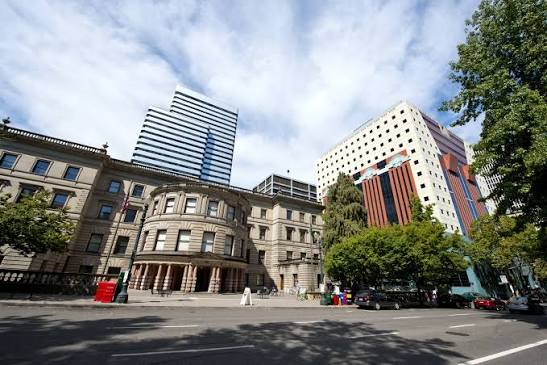
All six incumbent Portland City Council members up for reelection appeared poised to keep their seats as of Wednesday, Nov. 4, according to preliminary ranked-choice voting results.
The early returns from Districts 3 and 4 point to a council that stays exactly as it is: six more progressive members and six moderates, the same split that has defined the 12-person body since councilors entered office in 2024. OPB reported the incumbents held across-the-board leads on election night.
The results are preliminary. About 58% of Multnomah County ballots had not been counted as of Wednesday morning, the Portland Tribune reported.
District 4
Councilor Olivia Clark crossed the 25%-plus-one threshold needed to win in the first round, pulling about 30.96% of first-choice votes, according to the Portland Tribune. Councilors Eric Zimmerman and Mitch Green trailed in second and third place. Twelve candidates competed for the district's three seats, which cover Portland's west side and the Sellwood, Eastmoreland and Westmoreland neighborhoods.
A chamber of commerce-funded committee called "Ditch Mitch" spent roughly $140,000 on billboards, yard signs and buttons opposing Green, OPB reported. Green held his lead anyway.
"This was a repudiation of the old style of Portland campaigning, where you get a couple of rich guys in a trenchcoat and throw money at ads," Green told OPB. "You have to run campaigns, you have to knock doors."
District 3
Councilors Steve Novick, Tiffany Koyama Lane and Angelita Morillo led a 21-candidate field, according to Axios Portland. Novick cleared the threshold with 28.8% of first-choice votes, according to a FairVote analysis. Koyama Lane and Morillo trailed at 23.7% and 23.6%.
An independent expenditure campaign called Unity PAC spent nearly $400,000 in the final month to support District 3 candidate Kellie Torres, OPB reported. That was the most outside money spent on any council race this cycle. Torres was in fourth place as of Wednesday morning. Novick said the outcome proves "money is overrated" in council races, OPB reported.
What the new system means
Under Portland's proportional ranked-choice voting (RCV) system, approved by voters in 2024, council candidates need just over 25% of their district's vote to win. Under the old citywide system, candidates needed more than 50%.
Laurie Wimmer, executive secretary and treasurer of the Northwest Oregon Labor Council, told OPB the lower threshold creates a built-in advantage for incumbents with name recognition. "Our new system has created something of a superincumbency," Wimmer said. "Hypothetically, someone could be loathed by 75% of their constituents and still win."
Looking ahead
District 3 and 4 councilors entered office in 2024 with only two-year terms, part of a staggered schedule meant to alternate district elections every two years. They now move to four-year terms.
Councilor Angelita Morillo, who has frequently clashed with colleague Novick, told OPB she sees an opening for cooperation now that the campaign is behind them. Clark told OPB the security of reelection may encourage councilors to work together more.
The remaining half of the council and the mayor's office are up for election in 2028. The next round of ballot results was expected at 6 p.m. Thursday, Nov. 5, according to Axios Portland.