Portland's all-mail voting system faces a direct legal threat after the U.S. Supreme Court ruled 6-3 on Aug. 24, that President Trump's executive order directing USPS to screen mail ballots can move forward.
The ruling lands 51 days before county elections offices begin mailing ballots to more than 3 million Oregon voters in October.
Oregon Attorney General Dan Rayfield, Governor Tina Kotek and Secretary of State Tobias Read issued a joint statement within hours of the decision, calling it "a temporary setback, nothing more."
"We're not going to let Donald Trump interfere in our elections — and we're certainly not going to let him decide who gets a ballot and who doesn't," Rayfield said in the joint statement. "This fight is far from over."
Rayfield's office said he will immediately sue if USPS attempts to interfere with Oregon's vote-by-mail process.
What the order requires
Trump signed Executive Order 14399 on March 31. It directs the Department of Homeland Security to build a list of eligible voters in every state, requires states to submit their own voter rolls to USPS, and orders USPS to refuse delivery of ballots to anyone not on the verified list.
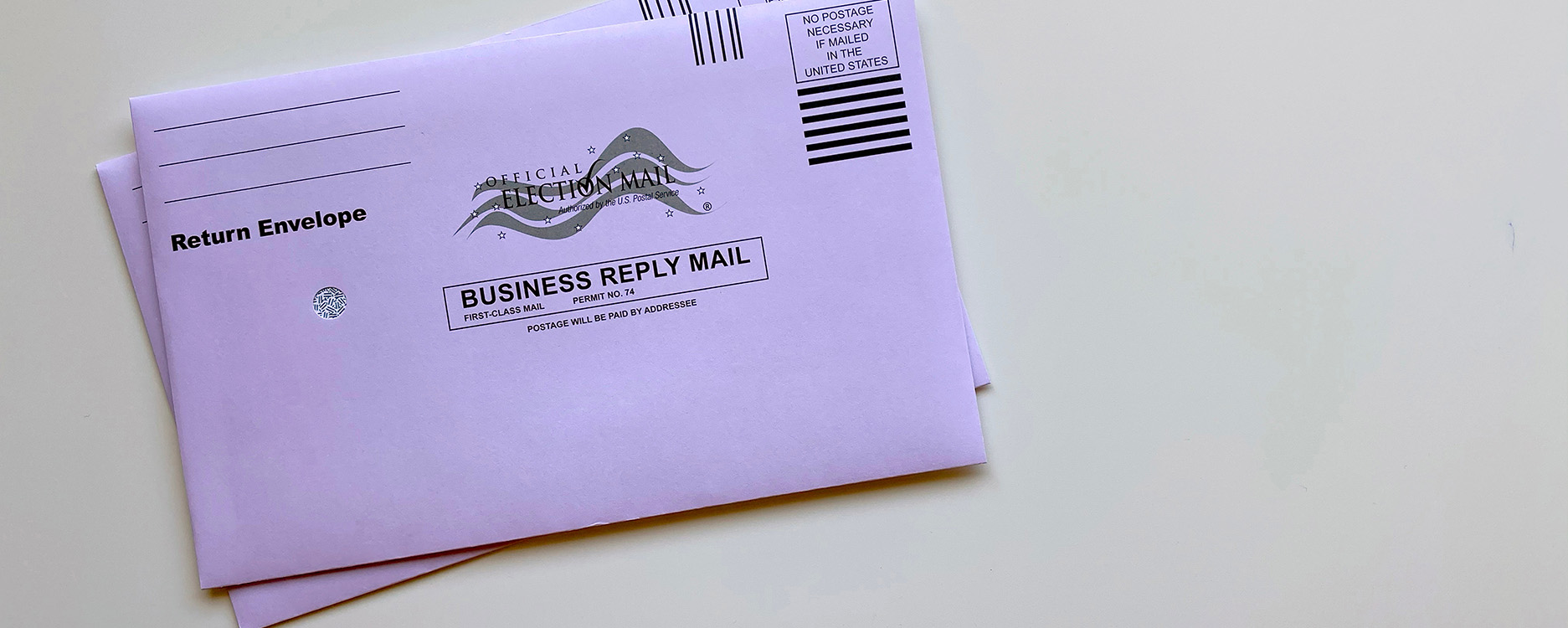
States would also have to redesign and reprint ballot envelopes to display an official Election Mail logo and unique barcodes, according to Democracy Docket.
Oregon joined 23 other states and D.C. in suing to block the order. A federal district judge in Massachusetts, U.S. District Judge Indira Talwani, issued a preliminary injunction blocking it for the November election. The 1st Circuit Court of Appeals upheld that injunction.
The Supreme Court's Monday ruling reversed those lower courts on procedural grounds, finding the states had not proven they'd been harmed by rules that hadn't yet taken effect. The majority did not rule on whether the order itself is constitutional.
"The Court's disposition of this application does not mean that any measure taken by the Government to implement the Order will necessarily be lawful," the unsigned majority opinion stated, according to The Oregonian. "On that score, time will tell."
Justice Ketanji Brown Jackson, dissenting, wrote that the ruling "needlessly injects chaos and uncertainty into the upcoming midterm elections."
Where Oregon stands now
Oregon has voted entirely by mail since 2000, after voters approved Ballot Measure 60 in 1998 with 69.4% support. The state's May 2026 primary drew more than 1.28 million voters, the highest midterm primary turnout in state history, KOIN reported.
As of the ruling, Oregon had not submitted voter lists to the federal government. USPS issued a final rule on Aug. 22, detailing how the ballot verification process would work, but that rule had not yet been published in the Federal Register, according to Rayfield's office.
Kotek called the executive order "unconstitutional and an assault on our democracy." Read said Oregon's elections "will proceed as planned this November, free from any illegal federal interference."
The Nov. 3 midterm election is roughly 70 days from the Aug. 24 ruling. No specific court hearing date has been set for the next round of legal challenges, but Rayfield's office said the case returns to Judge Talwani's court in Massachusetts for further proceedings.
Multnomah County voters can verify their registration at oregonvotes.gov.