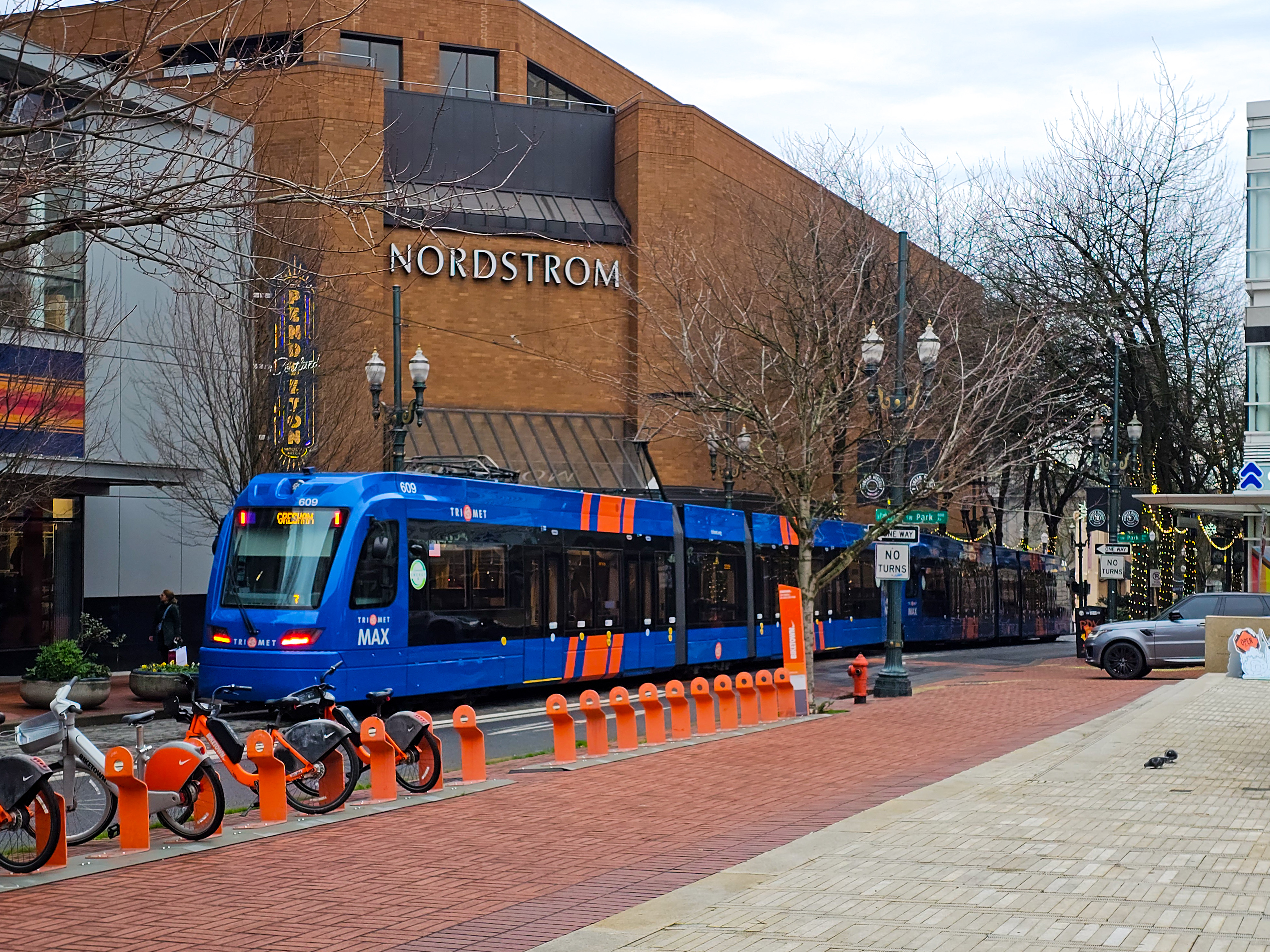
TriMet's MAX light rail system marks its 40th anniversary Saturday, celebrating 950 million rides even as the agency grapples with a budget shortfall that has already triggered the largest service cuts since 2020.
Service cuts and a widening budget gap
The milestone arrives two weeks after TriMet enacted sweeping reductions affecting 34 bus lines and the MAX Green Line. The agency faces an estimated $300 million budget shortfall, and ridership has plateaued at about 70% of pre-pandemic levels, OPB reported.
State survey could shape future funding
A state survey now open could shape what comes next. Gov. Tina Kotek's Rebuilding Our Transportation Vision Workgroup is collecting public input on transportation priorities through an online survey that closes at 6 p.m. Sept. 10. The workgroup's recommendations will inform the 2027 legislative session, where lawmakers will confront a $200 million statewide transportation budget gap for 2027-29, according to the Bend Bulletin.
Oregon voters rejected a proposed gas tax in May that would have provided short-term transit funding.
A freeway revolt sparked the system
The anniversary itself traces to a freeway revolt. In 1974, the Portland City Council withdrew support for the Mount Hood Freeway, which would have roughly paralleled Southeast Division Street between downtown and Interstate 205, according to a TriMet anniversary post. The council sought to redirect federal highway dollars toward transit instead.
Early planner recalls building the system from scratch
Bill Lieberman, who started as TriMet's first manager of rail operations planning in September 1975, helped build the system from scratch. In 1983, when he wrote the agency's first light rail operators' manual, the Ruby Junction Rail Operations Facility had a staff of three.
"It was like the moment we had been waiting for after years of planning and engineering work," Lieberman said of opening day. "Now it was no longer theoretical ... it was real!"
From opening day to a five-line system
The first MAX vehicles, built in Vermont by Bombardier Transportation, arrived in 1983 and 1984. Grassroots groups including Citizens for Better Transit and the Oregon Association of Railway Passengers rallied support. On Sept. 5, 1986, tens of thousands gathered in downtown Portland as the inaugural passenger trip stopped at the Pioneer Courthouse Square MAX Station.
MAX now spans five lines. The system stretches 60 miles.
Financial headwinds cloud the road ahead
That growth faces financial headwinds. TriMet media relations manager Tia York told Willamette Week in August, "We are relentless in our search for new revenue ... We don't believe we can cut ourselves out of this financial crisis."
Portland transit consultant Jarrett Walker put it more bluntly in the same Willamette Week report: "Our problem is that transit is everybody's seventh priority."