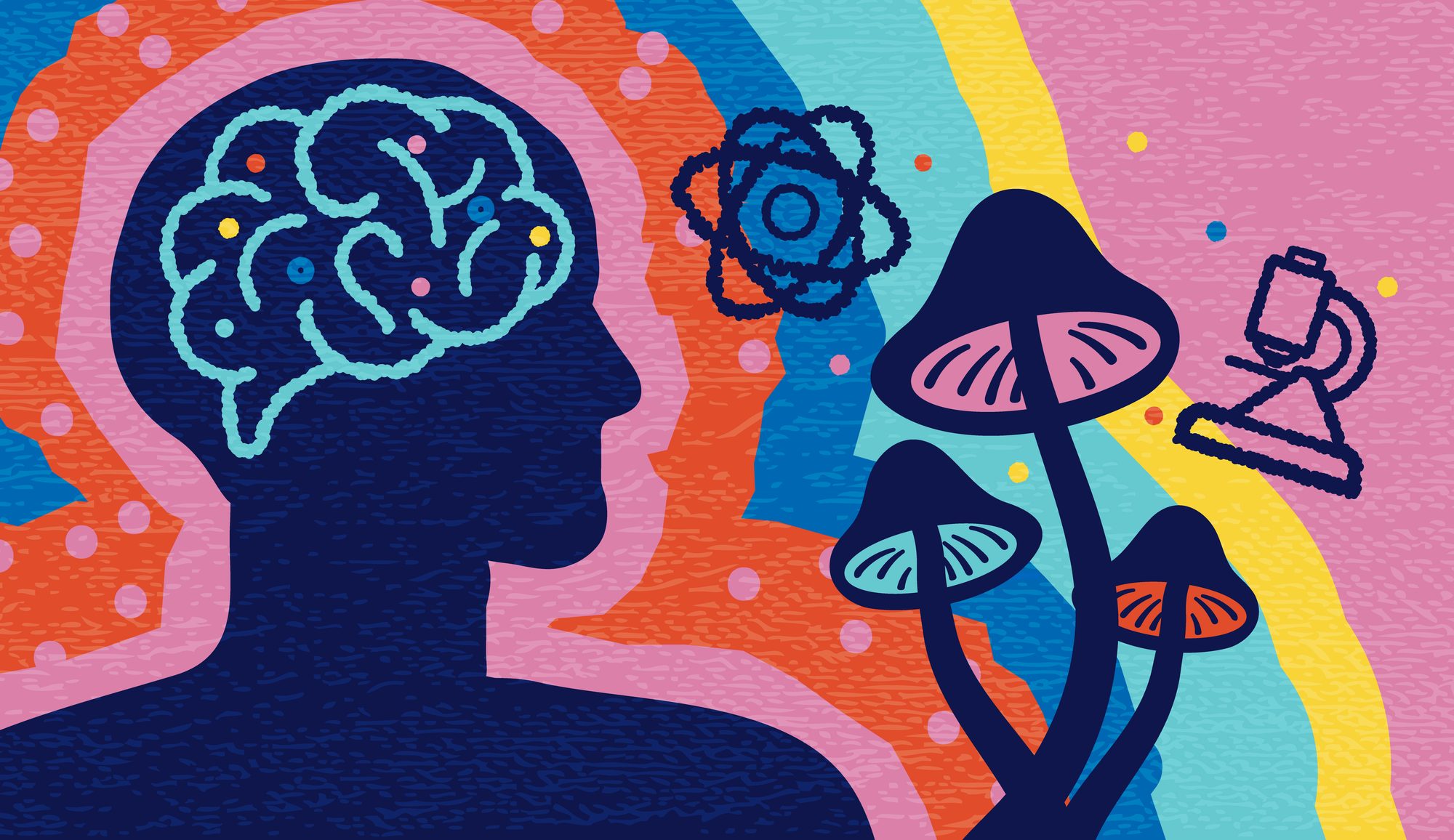
More than 90% of people who took psilocybin at Oregon's licensed service centers reported benefits one month later, according to a landmark study from Oregon Health & Science University published Aug. 19, in the journal JAMA Network Open.
The research, led by OHSU professor of medicine Dr. Todd Korthuis, tracked 346 adults who completed sessions at 24 of 26 licensed service centers between November 2024 and June 2026. It is the largest study of psychedelics conducted outside clinical trials.
Depression rates among participants dropped from 42.2% at baseline to 16.5% at three months. Anxiety fell from 45.1% to 13.2%. PTSD symptoms decreased from 48% to 16.8%. At one month, 64.9% ranked the experience among the 10 most meaningful of their lives.
"I have been persuaded," Korthuis said at the Psychedelic Innovation Summit in Portland on Wednesday, Aug. 19. "The data are very clear that the Oregon Psilocybin Services program in fact is safe."
Only seven participants, roughly 2%, described the experience as harmful. No one reported a serious physical health event. Four first-time users with preexisting mental health conditions did experience adverse behavioral reactions requiring medical attention.
Researchers also flagged a safety concern: three participants reported new thoughts of dying or suicide one week after their session, a number that doubled to six by the three-month mark.
A regulatory gap compounds the risk. Facilitators reported only one of the four serious adverse reactions to the state during the session; Oregon currently mandates reporting only for safety incidents occurring within three days.
Who's using the program
The study's participants were predominantly white (86.7%), college-educated (76.6% held at least a bachelor's degree) and affluent, with 29% reporting household incomes above $200,000. Korthuis told OPB on Aug. 19 that those demographics closely mirror the broader population visiting Oregon's centers, which are concentrated in the Portland area.
About 64.5% of participants sought services to treat mental health issues, and 51.4% were processing trauma. Sessions cost hundreds to thousands of dollars and are not covered by insurance because psilocybin remains a Schedule I controlled substance under federal law. In the study, 32.1% said the cost was a financial strain, though 81% considered it worth the investment.
Cost and access barriers ahead
The Oregon Health Authority proposed rule changes on June 26 that would double licensing fees for service centers from $10,000 to $20,000 and for facilitators from $2,000 to $4,000, citing rising costs. Public rulemaking hearings are expected to begin in September.
The state's Psilocybin Services section is also set to merge with the Oregon Medical Marijuana Program by Sept. 1 as both programs face budget shortfalls.
Albert Garcia-Romeu, a professor of psychiatry at Johns Hopkins School of Medicine who was not involved in the study, offered a note of caution in an Aug. 19 interview with OPB: "I would say that we really can't generalize based on this study that it's going to be this safe and look this way for everyone."
What comes next
OHSU received a $3.3 million, five-year federal grant earlier in 2026 to study psilocybin's effect on people seeking state services to reduce illicit substance use. The Oregon Psychedelic Evaluation Nexus research platform has already expanded to Colorado, the second state to approve regulated psilocybin services.
More than 20,000 people have accessed Oregon's program since it launched in 2023. Korthuis noted that Oregon counties that opted out of allowing service centers now have less justification for holding out given the safety data.
Residents can track updates on the proposed fee increases through the Oregon Health Authority's psilocybin services page. Public rulemaking hearings are expected in September.
If you are having suicidal thoughts, call or text 988 to reach the National Suicide & Crisis Lifeline.