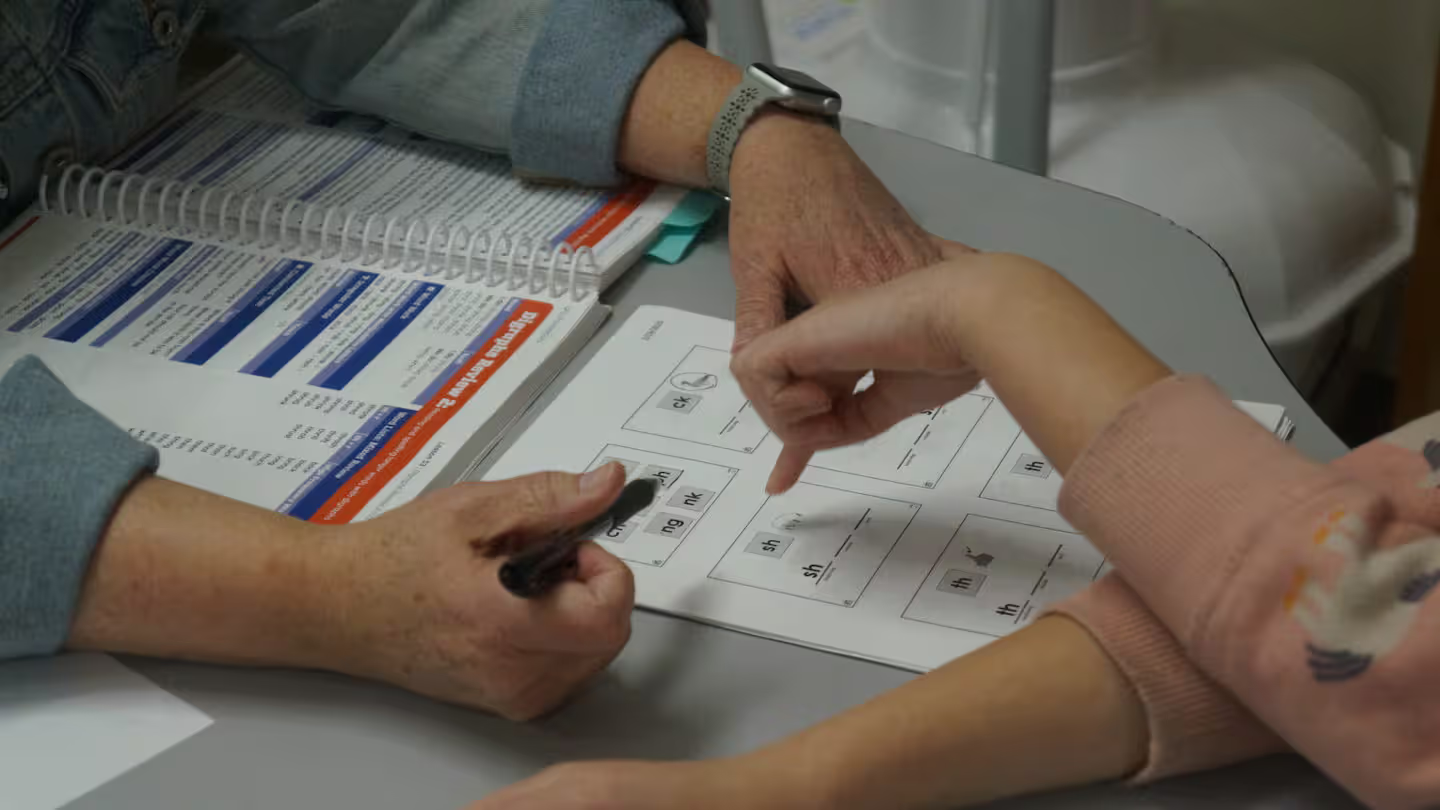
Nearly three out of four Oregon fourth graders cannot read at grade level, slightly worse than the 70% national average.
Portland families will also enter the 2026-27 school year with 80 fewer teachers in their buildings.
The 2026 Annie E. Casey Kids Count Data Book ranks Oregon 44th in the nation for education overall. The state earned high marks for children's health insurance coverage, ranking 6th nationally with 97% of kids insured. But the reading numbers tell a different story: 73% of Oregon fourth graders scored below proficient in reading in 2024, up from 66% in 2019.
"It should be alarming to all of us," said Bridget Daisey, executive director of Our Children Oregon. "Especially when we're talking about helping prepare children for their future into adulthood."
The report also found 76% of Oregon eighth graders were not proficient in math in 2024, compared with 69% in 2019. Oregon's on-time high school graduation rate ticked up from 80% to 82% but still trails the national average of 87%.
Fewer 3- and 4-year-olds enrolled in preschool programs statewide, an indicator the report flags as affecting long-term academic outcomes.
The data lands as Portland Public Schools grapples with a $50 million budget shortfall. The PPS Board of Education unanimously adopted the 2026-27 budget on June 24, eliminating 320 full-time positions, including 80 teachers.
The shortfall is driven by rising costs, limited state funding, and declining enrollment.
It's the fifth consecutive year of cuts. PPS trimmed $30 million in 2022-23, $10 million in 2023-24, $15 million in 2024-25, and $40 million in 2025-26. Board Vice Chair Michelle DePass acknowledged the difficulty of the vote at the June 24 meeting.
Meanwhile, the district has paused an AI reading tool that was piloted at 10 schools. The board's June 24 budget amendment froze acquisition of any new generative AI educational software and requires a 120-day inventory of all AI systems already in district classrooms.
The move followed concerns raised by board member Stephanie Engelsman about a $5,160 pilot contract with Amira Learning, an AI reading tutor used at 10 PPS schools during the 2025-26 year. Engelsman said the district's inboxes were "filled with concerns about how AI is infiltrating our schools" without a board-approved policy.
Creston Elementary parent Zack Walker had raised concerns about his kindergartener's voice data being recorded and stored by the AI system.
Oregon lawmakers allocated $11.4 billion for schools during the 2025-26 and 2026-27 biennium, yet the state remains the only one that uses U.S. Census Bureau estimates rather than state data to count students in poverty for funding purposes.
That method undercounts low-income students and shortchanges the districts serving them, according to the Oregon Capital Chronicle.
Sen. Noah Robinson, R-Cave Junction, said at a June legislative hearing that Oregon keeps "kicking the problem down the road" and called for more urgency, noting students "are being educated now" and won't benefit from fixes made in five or ten years.
The PPS Community Budget Review Committee holds public meetings where families can weigh in on spending priorities.
Meetings stream live at youtube.com/@ppsfinance/live. Check pps.net/CBRC for the next confirmed meeting date and agenda.