Thirteen rail cars carrying residual chlorine rolled through Portland's Pearl District on Tuesday, Aug. 11, passing within the collapse zone of the fire-gutted Centennial Mills building despite Union Pacific's assurance that no toxic materials would travel the corridor.
City Administrator Raymond C. Lee III responded the same day with a formal demand letter ordering Union Pacific to immediately stop all shipments of toxic inhalation hazard chemicals, including cars with only residual amounts, through the Northwest Naito Parkway corridor.
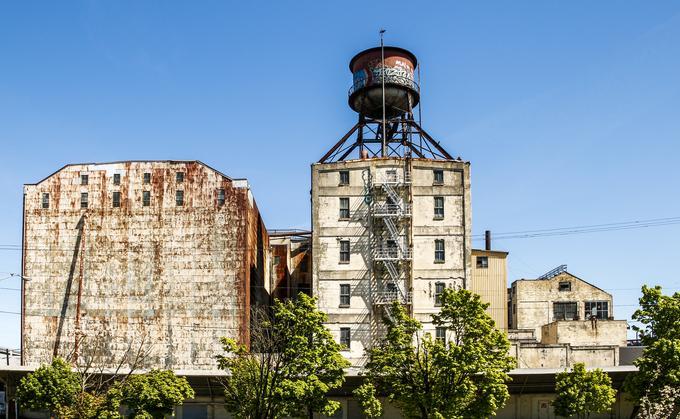
The demand marks the sharpest escalation yet between Portland and the railroad over safety near the 116-year-old warehouse, which has been leaning toward the tracks since a four-alarm fire destroyed its interior on Aug. 2.
The loophole
Union Pacific General Manager Erik Erickson sent the city a safety plan on Monday, Aug. 10, pledging to restrict "loaded" cars carrying toxic or poison inhalation hazard materials from the corridor through Aug. 21. But the plan said nothing about cars carrying residual amounts of those chemicals.
The next morning, 13 chlorine cars moved through. City officials discovered the shipment by reviewing the railroad's official car listing through the AskRail application and raised the issue at a 3 p.m. coordination meeting with Union Pacific that same day.
According to Portland Fire & Rescue's hazmat coordinator, a single rail car at 5% residual volume can hold approximately 1,500 gallons of chlorine. Lee's letter warned that a release of that size would produce a hazardous plume threatening nearby residents and workers.
Building still deteriorating
Engineers have confirmed widening cracks, shifting walls, degrading structural footings and active leaning toward the rail corridor, according to the city's demand letter. City staff standing outside the collapse zone reported feeling vibrations when the first railcar passed the site.
"Passing trains could trigger the collapse of the building, resulting in death or serious injury to those on the train and damage to the surrounding property," Lee said at an Aug. 10 press conference, the day Mayor Keith Wilson declared a local state of emergency.
The fire destroyed all internal floors and the roof of the eight-story warehouse, leaving four exterior concrete walls and a rooftop water tower standing with no cross-support. The city's safety perimeter extends 1.5 times the building's height.
Union Pacific's response
Union Pacific told KGW on Wednesday, Aug. 12, that it has implemented safety measures including 10 mph speed limits, stationary ballast cars on the eastern track and on-site hazmat response personnel. The railroad also requested the city provide a demolition plan "without delay."
Erickson's Aug. 10 letter pushed vibration monitoring responsibility back to the city, writing that Portland should "promptly take the lead" if it believes additional monitoring is warranted.
What's next
Portland Permitting & Development has ordered the building demolished, with work required to begin no later than Friday, Aug. 14. The city is working with property owner Stuart Lindquist on demolition plans. Portland Fire & Rescue's lead investigator is expected to be involved because K-9 sweeps detected a high likelihood of human remains in the rubble. Early evidence leads investigators to believe the fire was human-caused.
District 4 councilors Olivia Clark, Eric Zimmerman and Mitch Green, who represent the Pearl District and downtown, have publicly backed Lee's push for stronger safety measures. As of Thursday, Aug. 13, Union Pacific has not provided written confirmation that it will comply with the city's demand to halt all toxic shipments.
The Oregon Department of Environmental Quality has hired contractors for fire debris cleanup in the surrounding neighborhood. Residents with concerns can call 888-490-6275 or email [email protected].