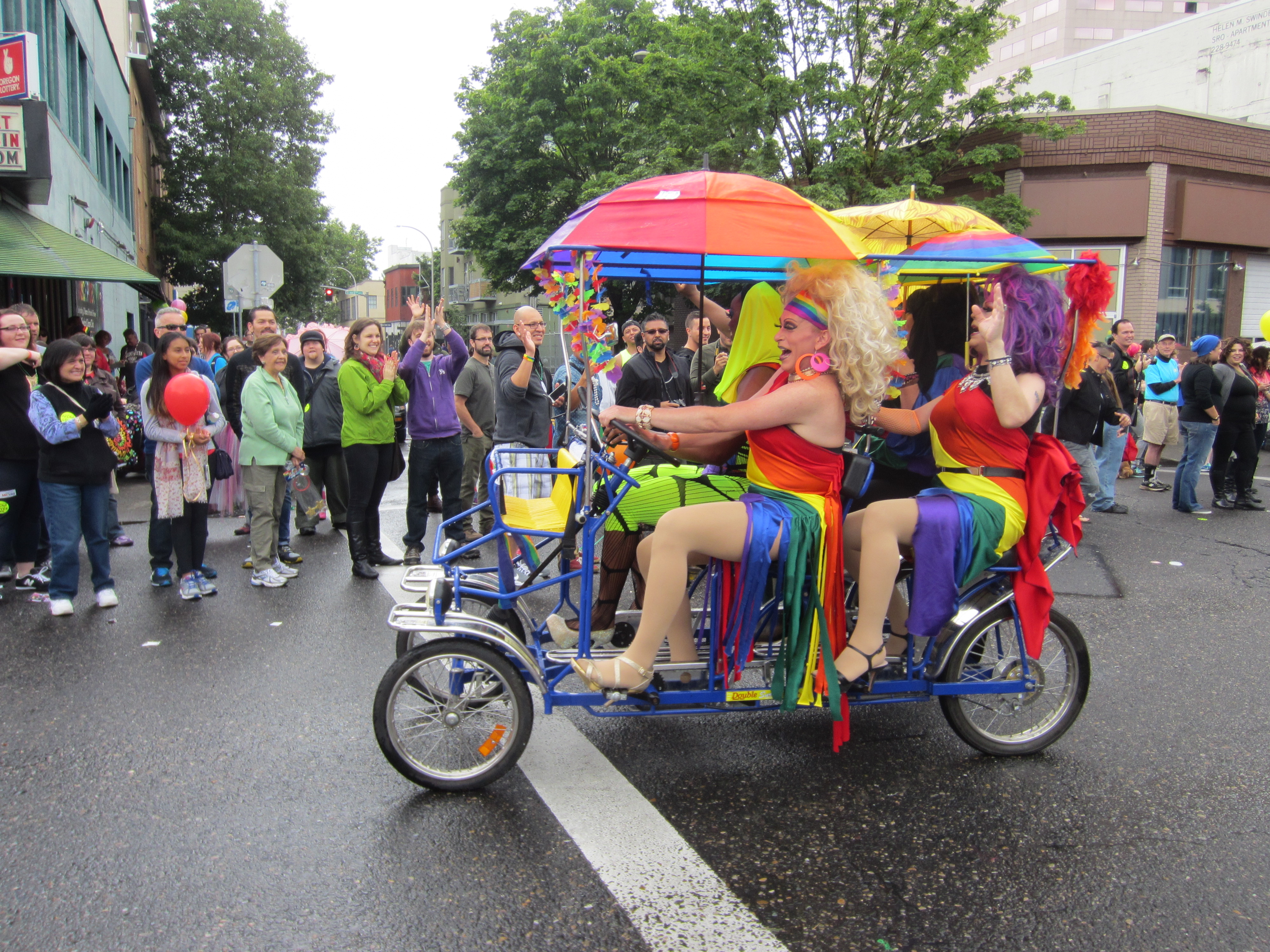
Portland has claimed the top spot among major U.S. cities for the share of households made up of same-sex couples, with an estimated 3.8% compared to Seattle's roughly 3.7%.
The ranking comes from 2025 U.S. Census data first analyzed by Seattle Times columnist Gene Balk in a column published June 22.
Auburn Marie, development director and spokesperson for Basic Rights Oregon, said the number reflects what neighbors already see in their daily lives.
"It doesn't feel odd or out of place for people to be open and authentically living their lives in Portland," Marie told OregonLive. "It feels very normal because it is so common."
Marie pointed to Oregon's legal protections as a draw. The state was among the earliest to ban conversion therapy for minors (2015, the third state to do so), and Marie said Oregon was the first to legalize adoption for same-sex couples.
Oregon decriminalized same-sex sexual activity in 1972 and enacted the Oregon Equality Act in 2008, banning discrimination based on sexual orientation and gender identity in employment, housing, and public accommodations.
Oregon's LGBTQ2SIA+ population age 13 and older grew more than 37% between 2015–17 and 2023–25, rising from roughly 207,000 to more than 284,000, according to Gallup and Williams Institute estimates.
Nort Wasserman, training manager at Bradley Angle's Marsha's Folx program on North Albina Avenue, said the organization has worked with people who fled states such as Texas, Alabama, and Florida seeking stronger legal protections. Wasserman credited Portland's existing community and access to services, including gender-affirming care, for drawing newcomers.
But affordability remains a barrier. Marie noted Portland is "not a cheap place to live" for people relocating from out of state. A June 2026 Axios analysis found homebuyers needed to earn $150,364 annually to afford the median-priced home in states with LGBTQ housing protections, 46.8% more than in states without them.
A May 2025 Williams Institute study found 48% of surveyed transgender adults had moved or were considering doing so to reach a more affirming location. Cost of relocating (82%) and cost of living (64%) topped the list of barriers.
The census data measures household share, not total population, and does not identify why same-sex couples choose particular cities.
Community resources:
- Basic Rights Oregon — basicrights.org
- Bradley Angle / Marsha's Folx program — 5432 N. Albina Ave., Portland; bradleyangle.org