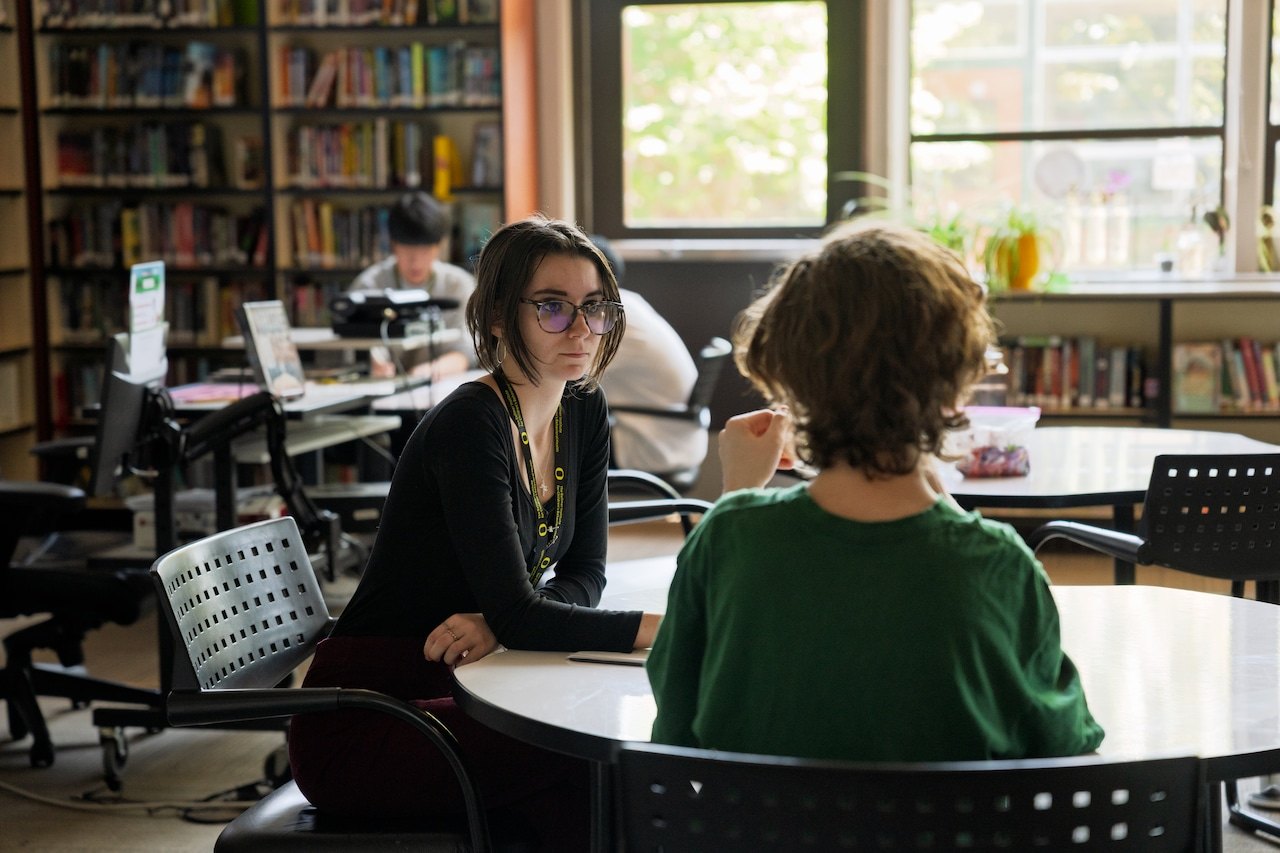
Twelve newly trained child behavioral health specialists are working in Portland-area schools, pediatric clinics, and community organizations after graduating in June from what the University of Oregon calls a first-of-its-kind undergraduate program at its Ballmer Institute.
The 17-member inaugural class earned specialized bachelor's degrees in child behavioral health. Of the 17 graduates, 12 stayed in the Portland region, with several hired by the same agencies where they completed internships, including Portland Public Schools, the Parkrose School District, Morrison Child and Family Services, and Metropolitan Pediatrics.
For Portland families who have struggled to find youth mental health support, the graduates represent a new tier of provider trained to intervene before a child's needs escalate into crisis.
"These are bachelor's trained providers who we are training to address key gaps in our mental health system," Kate McLaughlin, the institute's executive director, told The Oregonian.
McLaughlin said more than half of Oregon families seeking behavioral health services for their children cannot find care because demand outstrips the workforce.
How the program works
Students spend two years at UO's Eugene campus completing prerequisites, then move to the Ballmer Institute's Northeast Portland campus for two years of applied coursework and fieldwork. Each student logs 700 hours of supervised placements over 18 months at schools, pediatric clinics, and mental health agencies. Across the first two cohorts, those placements have delivered more than 5,000 hours of behavioral health services to children and families in the Portland metro area.
The model is built around prevention and early intervention. Graduates work on multidisciplinary care teams, filling a role McLaughlin compared to registered nurses working alongside physicians.
Graduates on the ground
Bella Hernandez now works as a youth support specialist at New Avenues for Youth, serving young people experiencing or at risk of homelessness. She connected with the organization after a director visited one of her Ballmer Institute classes.
Laine Lovgren accepted a caseworker position at Morrison Child and Family Services after completing her internship there. As early as her second quarter, Lovgren was answering calls on youth crisis lifelines.
Mei Taw, a Portland native, said the program offered a way to serve the community she grew up in. "The sense of working with the community I grew up with was important to me," Taw said.
A new state license and a surprise hiring trend
In May 2026, Gov. Tina Kotek signed Senate Bill 1547, creating a "licensed behavioral health and wellness practitioner" credential for bachelor's-level providers. The bill was requested by the Ballmer Institute and took effect in June 2026.
Healthcare organizations, not schools, emerged as the largest hiring partners for the first class. That surprised institute leaders, who had expected schools to be the primary employers, and prompted the institute to expand collaborations with pediatric clinics and behavioral health agencies.
What's next
The next cohort, set to graduate in 2027, includes about 30 students. The institute expects the following class to enroll about 50. A $79 million Tykeson Child Behavioral Health Building broke ground on June 11 at UO's Portland campus, funded by $53.3 million in state bonds and $25.8 million in university funds and philanthropy.