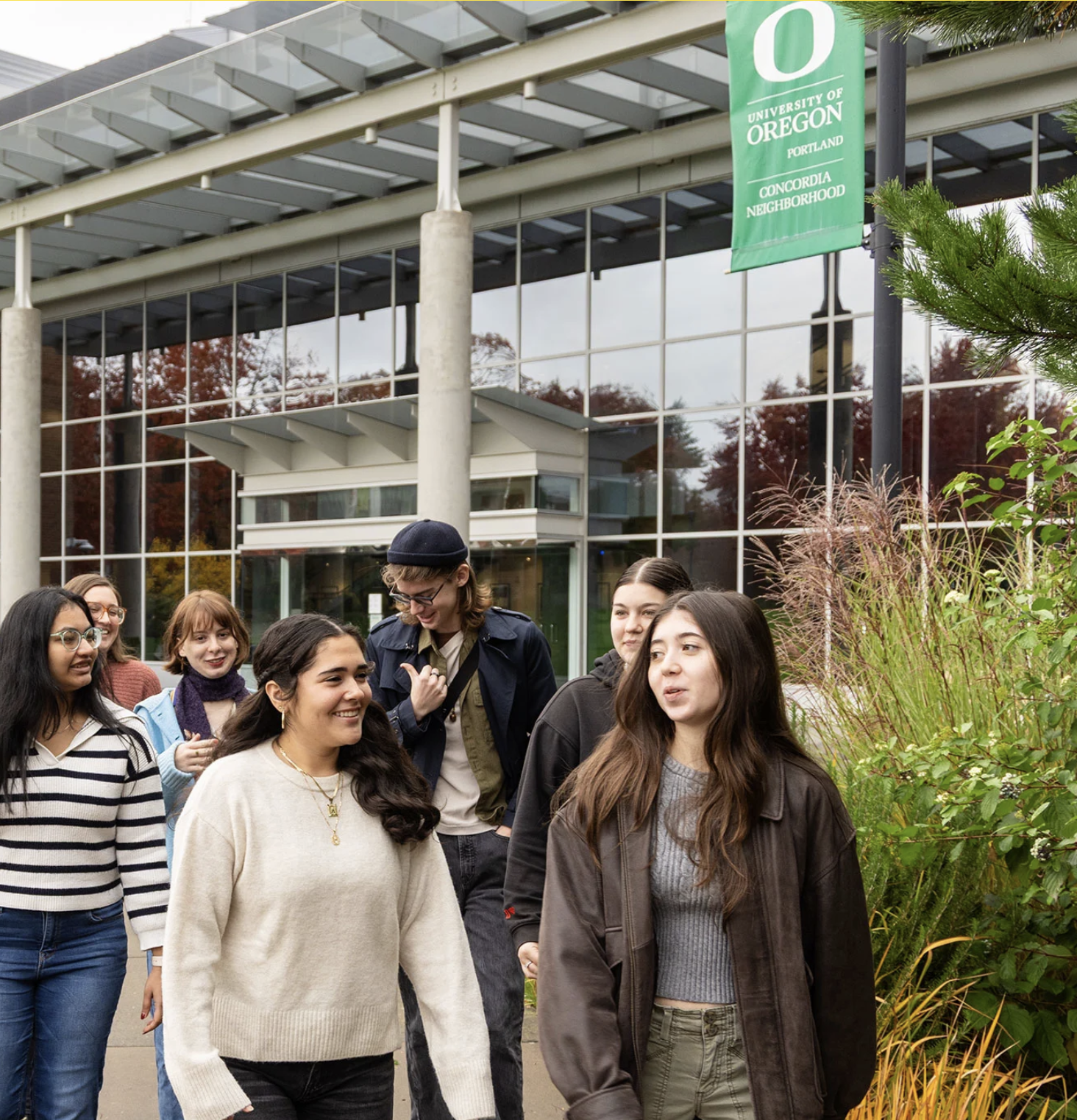
A $125 million gift from Steve and Connie Ballmer's philanthropic organization will fund a national expansion of the University of Oregon's youth behavioral health training program, with a new center opening Sept. 1 at UO's North Portland campus.
The Catalyst Center for Youth Behavioral Health will serve as the headquarters for what UO hopes will become a network of up to 18 universities offering bachelor's-level degrees in child behavioral health over the next decade, according to OregonLive.
In its first phase, the center will select three partner universities, each receiving up to $30 million to build programs modeled on UO's. Those schools are expected to be announced in winter 2026.
The gift adds to the $425 million the Ballmers provided in 2022 to launch the Ballmer Institute for Children's Behavioral Health, which operates from UO's Portland campus.
Katie McLaughlin, the institute's executive director and a UO psychology professor, will also lead the Catalyst Center. She said the expansion deliberately targets one university each in a red state, a blue state and a purple state.
"If we are successful in bringing this program and this approach to other states, over the next 10 years, we will literally train tens of thousands of new providers, and provide services to millions of kids who would not otherwise have had access to care," McLaughlin told OregonLive on Tuesday.
The program already has Portland roots showing results. The Ballmer Institute graduated its inaugural class of 17 students in June, the first in the nation to earn specialized undergraduate degrees in child behavioral health. All 17 who sought jobs in the field found them, and 12 are staying in the Portland region, working in settings including Portland Public Schools, Parkrose School District, Morrison Child and Family Services and Latino Network, OregonLive reported in July.
Oregon laid the regulatory groundwork in May when Gov. Tina Kotek signed Senate Bill 1547 at the UO Portland campus, creating a license for bachelor's-level behavioral health providers.
The law, which took effect in June, allows graduates with 700 hours of clinical training to practice behavioral health promotion, prevention and brief interventions under the supervision of a licensed psychologist or clinical social worker. Nevada has passed similar legislation, and about a dozen other states are working on comparable credentialing laws.
The program is growing locally, too. The next cohort graduating in 2027 has about 30 students; the class after that is expected to reach 50.
Meanwhile, construction began in June on the 54,000-square-foot Tykeson Child Behavioral Health Building on UO's Portland campus, backed by $53.25 million in state bonding and $15 million from the Tykeson Family Foundation.
That mass-timber building, which will include a behavioral health clinic and telehealth center for rural Oregon, is set to open in early 2029.